Self-Hosting Postiz on RHEL 10: One Container, Six Platforms, Zero SaaS

Self-Hosting Postiz on RHEL 10: One Container, Six Platforms, Zero SaaS

I replaced Buffer with a self-hosted instance of Postiz running on RHEL 10. One Podman container. Six social media platforms. Full API control. This is the technical walkthrough of what I built and what broke along the way.

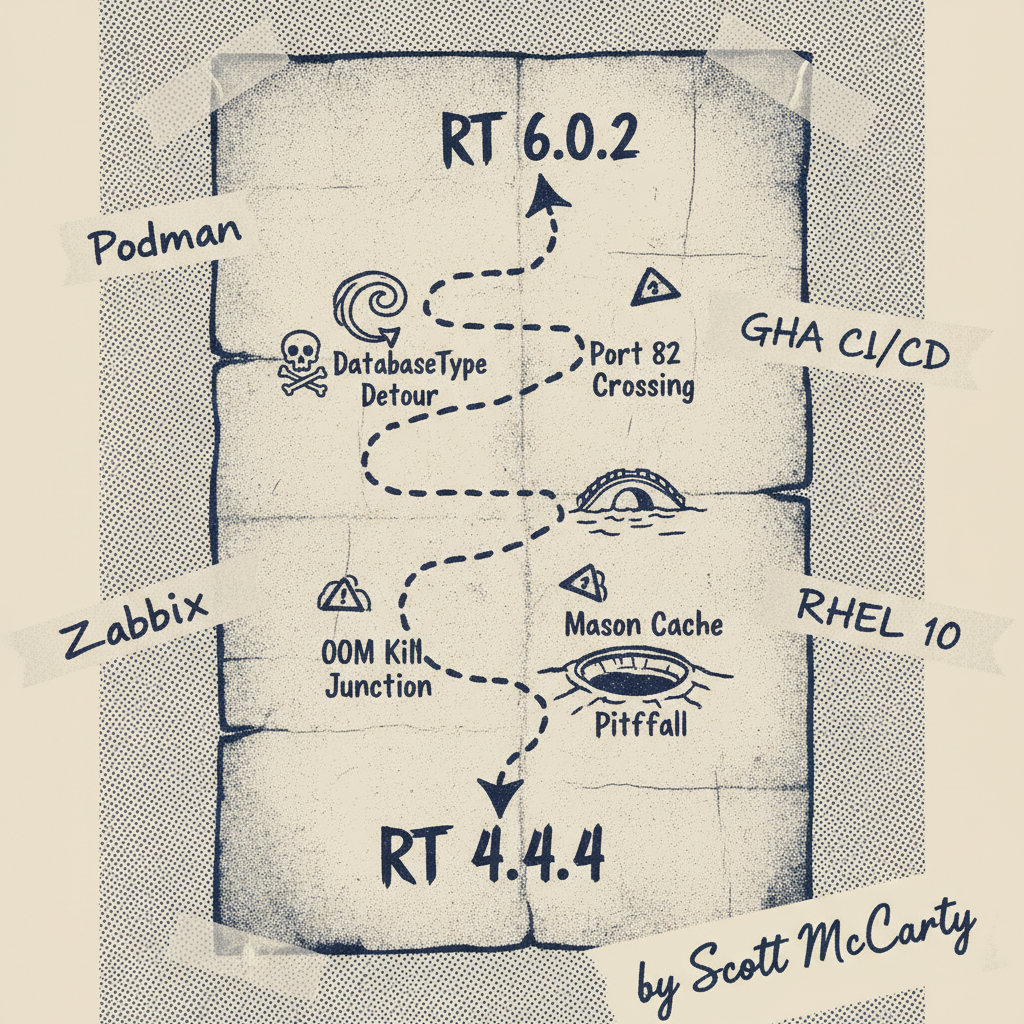
I Upgraded Request Tracker with an AI Co-Pilot. Here’s What Actually Happened.

I Upgraded Request Tracker with an AI Co-Pilot. Here’s What Actually Happened.
I Upgraded Request Tracker with an AI Co-Pilot. Here's What Actually Happened.

Request Tracker 4.4 reached end of life in November 2025. I’d been running RT 4.4.4 in a container on one of my Linode servers since 2020, and the upgrade to RT 6.0.2 had been sitting in my backlog for months. It’s the kind of task that’s never urgent until it is. You and I both

CI/CD for Your RHEL 10 Bootc Workstation: A Practical Guide to GitHub Actions, Podman, and Quay.io

CI/CD for Your RHEL 10 Bootc Workstation: A Practical Guide to GitHub Actions, Podman, and Quay.io
CI/CD for Image Mode RHEL - Lock and Ship concept with padlocked container crate

A practical walkthrough of setting up CI/CD for a RHEL 10 bootc workstation image using GitHub Actions, Podman, and Quay.io — including the workarounds you’ll actually need.

Local Models and Open Source Agents (and Why You Need to Pay Attention)

Local Models and Open Source Agents (and Why You Need to Pay Attention)

There’s a lot of negativity toward AI in the Fedora and RHEL communities right now. I get it — the hype cycle is real, and a lot of the marketing is insufferable. But I think the negativity is causing people to tune out, and when you tune out, you miss genuinely cool work that’s directly

First Use of Claude Code with Insights/Lightspeed MCP Server

First Use of Claude Code with Insights/Lightspeed MCP Server

It was late last night. The kids were finally in bed, the house was quiet, and I found myself with that dangerous combination of exhaustion and curiosity. I had a couple of hours of freedom, and I decided to tackle something that had been itching to do for a while: getting Claude Code running on

Part 1: Asking Other Teams to Do Something Really Hard

Part 1: Asking Other Teams to Do Something Really Hard

Background There’s a common move with software teams; one team will ask another team to do something really hard so that the first team can do something really easy. Most of the time, we don’t even mean to do it. But, it causes a lot of stress and wastes a lot of time. It reminds

Linux Container Crisis Tools

Linux Container Crisis Tools

I want to highlight a great post by Brendan Gregg: Linux Crisis Tools. He does a walk through of a scenario that strikes me as very realistic, and brings back memories from my 15 years managing Linux servers. You can tell he has real-world sysadmin experience. I think that’s key for being a good thought

The State of Enterprise Linux in 2023

The State of Enterprise Linux in 2023

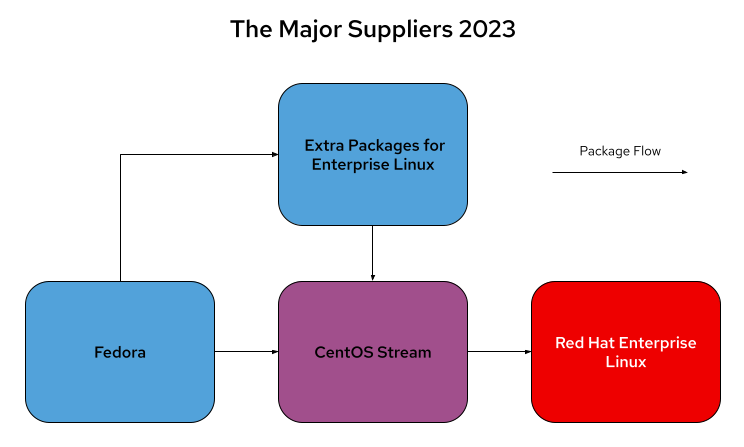
Introduction Are you a professional Linux Systems Administrator, Architect, or Site Reliability Engineer? Do you use Fedora, Red Hat Enterprise Linux (RHEL) or a derivative in the course of your work? Do you find it difficult to keep up with all of the changes that have been going on with RHEL in the last few

Upgrading from PHP 7.2 to PHP 7.4 with Red Hat Universal Base Image

Today, I noticed that the WordPress Admin Console was complaining that I was using PHP 7.2 which is getting old. I was kind of dreading upgrading because upgrades are a nightmare, but then I realized I had put everything in containers. One of the things that makes containers awesome is how easy it is to