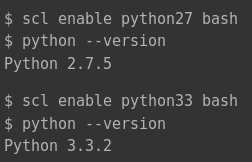
Background I manage the crunchtools lab and the infrastructure for this blog similar to a development data center. I have a rigorous weekly checklist, which includes optionally applying operating system patches as they are available. I do not perform the updates every week because of time constraints, but when I do, I patch all of
Category: Articles
Red Hat Enterprise Virtualization (RHEV) & Identity, Policy, Audit (IPA)
Background In my ever evolving lab, it came time to integrate Red Hat Enterprise Linux (RHEV) with Identity, Policy, Audit (IPA).There were a few caveats and searching Google didn’t help, so hopefully this article can save you some time. Integrating the two was fairly straitforward. The biggest challenge was finding a quick and easy way
Continue Reading “Red Hat Enterprise Virtualization (RHEV) & Identity, Policy, Audit (IPA)”
RHEL6 and Cisco WRVS4400N Networking
Background This weekend I decided to upgrade my home network with a Cisco WRVS4400N wireless router. Like a typical router it can provide standard wireless services WPA2, DHCP, etc, but the this model also provides support for four distinct VLANs and four distinct SSIDs. This has allowed me to create separate networks for work, play,
OpenSSL Certificate Authority
Background Recently, I discovered how to use the openssl provided CA script to create a certificate authority and self signed certificates. Traditionally, I had ran all fo the commands manually. When using the CA script it is critical to understand the underlying security concepts. Certificate Authority Openssl has infrstructure to create a long lived Certificate
KVM Virtual Network
Background My lab environment is supported by a KVM virtual network at each site. It includes four datacenters, more than a handful of physical machines and tens of KVM based virtual machines. Recently, I discovered that libvirtd does some interesting things with iptables FORWARD rules. When a NAT KVM virtual network is added, the following
Crunchtools Lab Environment
Background As a Solutions Architect for Red Hat, I have access to a very nice internal lab. This lab is great for giving demo’s but it is not set-up for personal use. As such, almost all of the Solutions Architects set up their own lab environments. Since, I recently came from working at a data
Last Pass with Yubikey
Basics There are several main factors in maintaining password security. When you store your passwords in an encrypted data store, also called a blob, whether it is online or not, there are two factors which need satisfied for a hacker to get your passwords. First, the hacker must gain access to your password data. Second,
Evernote vs. SpringPad
Background I have finally started working on upgrading my very complicated system which combines an online Pomodoro Timer, a Pomodoro Spreadsheet, MediaWiki, Request Tracker, Zimbra Notes, Google Tasks, Zimbra Calendar, and Google Calendar. I am finally combining Google Tasks, Zimbra Tasks and part of the Pomodoro Spreadsheet into SpringPad. Everyone has heard of Evernote, so
Monitoring Data Structure Metrics
I finished reading this article on High Scalability entitled, Troubleshooting Response Time Problems – Why You Cannot Trust Your System Metrics and it reminded me of why I developed a Cacti graphing plugin for monitoring sockets, pipes and files.
Going to Red Hat
Well, it’s official, I have accepted a position at Red Hat. I am excited because Red Hat is a company that I have wanted to work with since I started using Linux 1998. For Red Hat, I will be a Solutions Architect for Enterprise Linux, also known as a technology evangelist. Now, it’s my job